5 Essential Tips for Anyone Starting Their Bladesmith Journey
Starting your bladesmith journey is a bit like stepping into a workshop where fire is dramatic, metal is stubborn, and patience quietly judges you from the corner – and somehow you’re in charge of all three.
You don’t need a high-end forge or years of mystical blacksmith wisdom to begin though. Curiosity, a little focus, and the ability to laugh when something goes sideways are more than enough to get you moving in the right direction.
Below are five essential tips to help you start strong, avoid the disasters that are very avoidable, and actually enjoy the entire learning curve:
Start With Simple Tools
Starting with simple tools in bladesmithing isn’t a setback – it’s actually one of the smartest, most grounding choices you can make at the beginning.
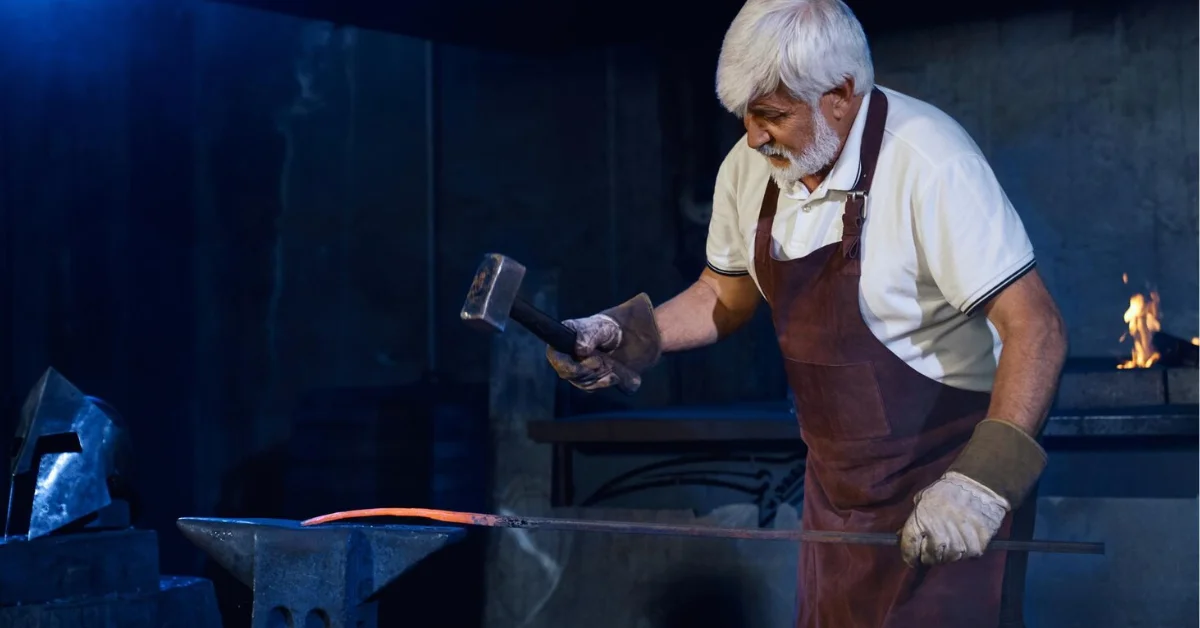
A hammer, a basic forge, something heavy enough to hit against, and a bit of stubborn curiosity will take you surprisingly far.
And here’s the magic of keeping it simple: it forces you to actually learn. Without machines smoothing over your mistakes and clutter stifling your creativity, you start understanding how steel wants to move, and how a tiny shift in your wrist changes a blow.
You build skill with your hands instead of relying on expensive shortcuts, and that makes every little win feel ten times more satisfying.
Learn Your Steels
Some steels are wonderfully beginner-friendly. They heat evenly, harden reliably, and won’t throw a tantrum if your temperatures aren’t perfect. Others, such as the high-alloy, exotic, “sounds impressive on paper” steels, are absolute divas.
Understanding steel isn’t about cramming technical charts into your brain. It’s about getting to know the material well enough that it actually behaves for you.
Get familiar with how different steels act, so your blade turns out better, and you have fewer “why are you like this?” moments at the forge later on.
Hammer Control
Hammer control is one of those deceptively simple skills that quietly separate “I made a knife-shaped object” from “I’m actually getting the hang of this.”
When people search for how to become a bladesmith, they often expect a list of tools, materials, and insane forge moments, but the truth is far less flashy and far more fundamental.
Good hammer control saves you endless frustration – fewer dents and fewer twists. You don’t need brute strength. You need precision.
Safety Gear
Wearing proper gloves, eye protection, ear protection, and sturdy shoes isn’t overkill; it’s just good sense.
Sparks don’t care how tough you think you are.
Hot scale doesn’t care that you’re “just doing a quick heat.” And grinders absolutely do not care that you’re planning to “stay out of the way.” The day you decide to skip your safety gear is usually the day your tools decide to teach you a lesson you didn’t want.
Work Slowly
Working slowly in bladesmithing has nothing to do with a lack of enthusiasm – it’s about giving the craft the respect it deserves.
When you deliberately slow your pace, everything becomes clearer. The colours in the steel stop feeling like guesswork and start becoming a language you can read.
Going slowly protects you from the classic beginner mistake of trying to “fix it later.”
To End
Keep things simple, focus on the fundamentals, and lean into the beautifully messy process.
With a steady mindset and a few solid basics, you’ll be turning raw metal into real blades sooner than you’d think.