
Why Dark Streaks Keep Appearing on Roofs in Certain Neighborhoods
If you’ve been wondering why your roof looks like it’s growing a science experiment while your neighbor stays clean, you’re dealing with algae. Those ugly black streaks aren’t dirt or mold. They’re living organisms, mainly a type of cyanobacteria called Gloeocapsa magma.
It literally feeds on the limestone in your shingles. Some streets get hit hard while others barely see any discoloration, and your local environment has everything to do with it.
How Local Climate and Humidity Accelerate Roof Discoloration
Algae, it loves moisture. If you live somewhere with high humidity and frequent rainfall, you’re basically rolling out the welcome mat. When the air stays consistently damp, algae spores land on your roof and think they’ve found paradise. They don’t even need rain. Morning dew alone gives them enough water to get comfortable and start spreading.
You’ll see this especially in neighborhoods near the water or in areas where it rains constantly. Your roof barely gets a chance to dry out before the next round of moisture shows up. That’s why houses in Florida or the Pacific Northwest deal with this way more than homes in Arizona.
The Role of Trees, Shade, and Organic Debris in Dark Roof Streaks
Walk around your block and you’ll see a pattern. The houses with big trees overhead always have the worst roof staining. Those shade trees are actually creating problems in three different ways.
First, they block the sun from hitting your roof. No sun means your shingles stay wet longer after it rains. Algae thrives in that cool, damp environment. Second, all those leaves and pine needles falling onto your roof trap water and break down into organic material that feeds the algae. And third, when you’ve got a thick canopy of trees around your house, the air doesn’t move as well. Everything stays damper, including your roof.
Why Roof Direction and Sun Exposure Matter More Than You Think
Pay attention to which side of your roof looks the worst. Chances are it’s the north side. That section gets the least direct sunlight during the day, so it stays cooler and wetter. Algae loves those conditions. Meanwhile, the south-facing part of your roof gets hammered by sun all day long, and UV light actually kills algae before it can really take hold.
The angle matters too. If your roof is pretty steep, water runs off quickly. But if you’ve got a lower slope, water sits around longer and gives algae more time to grow.
How Roofing Materials Influence Streak Formation (and When Cleaning Helps)
If you’ve got asphalt shingles, you’re dealing with a material that literally feeds algae. The limestone filler inside those shingles is what Gloeocapsa magma feeds on. Metal or tile roofs don’t have that same issue, though they can still get streaky in really humid areas. Some people install zinc or copper strips along the top of their roof. When it rains, these metals wash down and create an environment algae hates.
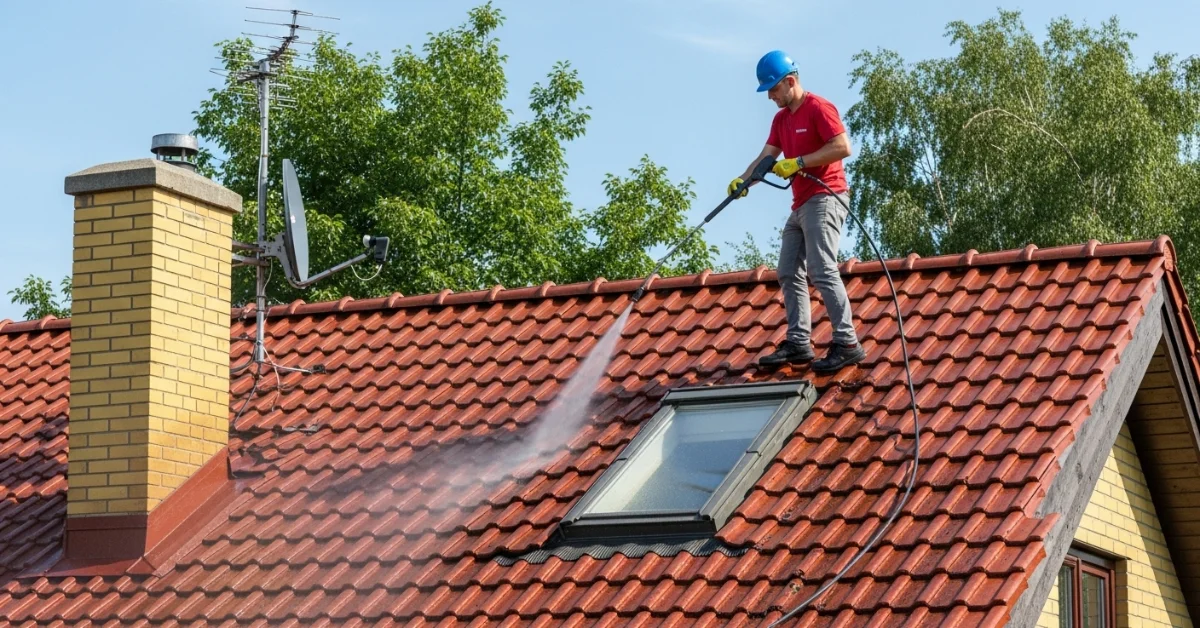
It works as prevention, but it won’t clean up what’s already there. For that, you need actual cleaning. Just don’t grab a pressure washer. That’ll blast the protective granules right off your shingles and wreck them. Professional roof cleaners in Olympia WA and other areas use special low-pressure treatments that kill the algae without destroying your roof.
Summing Up
Your neighborhood’s roof streak problem comes down to moisture, shade, sun angles, and what your roof is made of. Humid climates with lots of trees create perfect conditions for algae to spread. North-facing slopes and lower-pitched roofs make it worse. Asphalt shingles give algae something to feed on, which speeds up the whole process.
You can fight back by cutting back tree branches, making sure your attic ventilates properly, or adding zinc or copper strips. When the streaks get bad enough, professional cleaning will take care of it without damaging your shingles.